
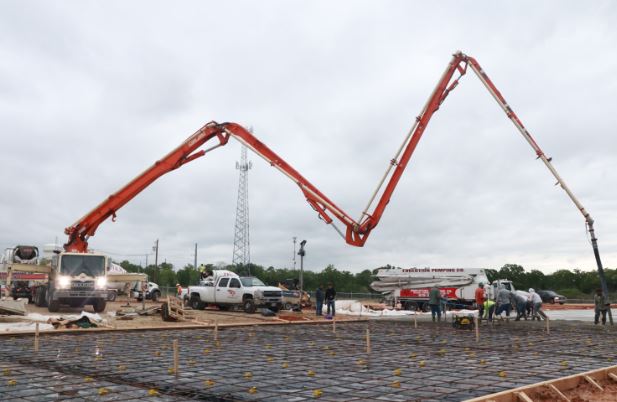
Getting ready for Concrete Pumping in Brazos Valley Texas?
Evolution Concrete BCS treats concrete as a job with a deadline built in once the material starts moving around Brazos Valley Texas projects.
Make contact to describe the pour you have in mind.
Why Concrete Work Is Planned Backward From the Pour
Most people exploring Concrete Pumping in Brazos Valley Texas see the surface that will be walked or driven on, though the outcome depends on what happens between the batch plant and the final finish. Concrete starts to set from the moment water meets cement, so everything it needs has to be ready before it arrives.
Evolution Concrete BCS approaches Concrete Pumping by working out the timing first with the rest of the plan falling into place around them.
Ready-Mix Basics Every Buyer Should Know
Concrete is a mix of cement, water, sand, and stone. Ordering the right mix for the application is the first technical decision of the job, and it helps to talk through the application before placing the order. Slump is the measure of how stiff or fluid the mix is, and water should only be added in the amounts that the mix design allows.
Many mixes include small amounts of chemicals or fibers that change how the concrete behaves. Some admixtures help with pumping, some with finishing, and some with long-term durability, and the right combination depends on the application and the weather.
Access Decides the Placement Method
The simplest way to place concrete is straight from the truck, and that is where pumping comes in. Each pump type has its own reach, capacity, and setup requirements, and a plan for where the truck, the pump, and the people will stand avoids confusion on the day.
Practical Questions About Concrete Pumping
The first step of any pump job is deciding where the pump and the trucks will stand. Long hose runs add friction, so the mix must be able to travel the distance, and a safe distance from electrical lines has to be maintained at all times. A pump can place concrete much faster than a wheelbarrow, which is why preparation matters more, and a short meeting before the pour makes sure everyone knows their part.
Hazards to Plan For on a Concrete Site
Wet concrete, moving trucks, and heavy equipment share a small space. Boots, gloves, and eye protection are standard for anyone working in wet concrete, and breaks for water and shade are built into the day.
What Goes Under the Concrete Matters as Much as the Concrete
Before any concrete arrives, the ground has to be shaped, compacted, and checked. In clay country, soil movement is the main reason slabs crack and shift, so the design of the slab is shaped by what is under it. Rebar and wire mesh hold cracks tight and add strength, and inspections of forms and steel may be required before concrete can be placed.
Planning a Pour Around the Forecast
In summer, concrete stiffens quickly in the drum and in the forms, so hot-weather pours are usually scheduled for early morning. Shade, wind screens, and dampened subgrade help control surface drying, and curing, which means keeping the concrete moist and protected after finishing, is just as important as the pour. A cloudburst during a pour is an emergency, so covers are kept on hand, and rescheduling a pour for a better day is a normal and sensible decision.
Why Concrete Cracks and What Control Joints Do
Placing is only the first stage, and finishing comes straight after. Stamped, exposed aggregate, and stained finishes add decoration but need their own steps, and mistakes at this stage are almost impossible to fix later. A slab with no joints will crack where it pleases, and hairline cracks are common and usually harmless.
From House Slabs to Backyard Patios
Projects around a house involve concrete in many different ways. Sidewalks and patios need proper slope so water drains away from the house, and the right approach depends on the use, the soil, and the size. Pumping is often the answer when a truck cannot get close, and walking the site with the contractor helps spot obstacles early.
Bigger Volumes and More Coordination
Concrete work at this scale is bigger and more complex to coordinate. Parking lots and large slabs need joint layouts and drainage planning across a wide area, and the schedule has to coordinate trucks, pumps, finishers, and other trades. Traffic control, staging areas, and equipment placement all affect how smoothly it goes, and communication among everyone on site is essential.
Working on Public Infrastructure
Public infrastructure has its own paperwork, testing, and inspection process, and the contractor has to follow them exactly. Public work often has strict deadlines, and delays can carry consequences, and a contractor should understand what the agency expects before bidding on the work.
Supply: Batch Plants, Delivery Trucks, and Truck Rental
The plant is where the mix is controlled, and the truck is how it reaches the job, and the plant needs accurate volume and timing information to schedule trucks. A small allowance for uneven ground and spillage is common practice, and a second plan helps if a truck is late.
Mixer trucks, pumps, and placing equipment are sometimes arranged on their own. A heavy truck or pump needs firm ground and enough room to turn and set up, and the plan should confirm every piece of equipment before the schedule is set.
Trucks, pumps, and equipment take over streets and driveways for a few hours. Protecting curbs, lawns, and sprinkler lines along the route, shows respect for the people who live next to the work.
Closing Out a Pour
The pour is the dramatic part, but the cleanup and protection matter too. Handling washout responsibly protects the property, the neighbors, and the water supply, and barricades keep people, pets, and vehicles off the surface until it is ready. Documentation of the work protects everyone involved, and the finished concrete should be checked against the plans.
Starting With the Site, the Volume, and the Schedule
Whenever Concrete Pumping in Brazos Valley Texas moves from an idea to a date, Evolution Concrete BCS can walk through the sequence from subgrade to curing. Contact us to begin, and bring along any drawings or measurements you have.