
Planning Concrete Pouring in Brazos Valley Texas?
Evolution Concrete BCS thinks through how concrete will get from the truck to the forms before anyone mixes a batch throughout Brazos Valley Texas businesses.
Start a conversation to ask how a placement like yours would be planned.
Why Concrete Work Is Planned Backward From the Pour
Most people exploring Concrete Pouring in Brazos Valley Texas think first about the finished slab, driveway, or foundation, yet the quality of the result is determined during a few hours. The material is workable for a limited time before it stiffens, so everything it needs has to be ready before it arrives.
Evolution Concrete BCS approaches Concrete Pouring by working out the timing first with the ground work following from those answers.
What Is in the Truck Decides What Comes Out of It
Concrete may look uniform, but its performance depends on its mix. Different jobs call for different strengths, and the plant adjusts the mix to match, and the supplier needs to know what the concrete will be used for. Slump is the measure of how stiff or fluid the mix is, and water should only be added in the amounts that the mix design allows.
Many mixes include small amounts of chemicals or fibers that change how the concrete behaves. Each additive has a purpose, and the supplier can explain which ones suit the job, and adding the wrong product can cause more trouble than it solves.
Getting Concrete From the Truck to Where It Goes
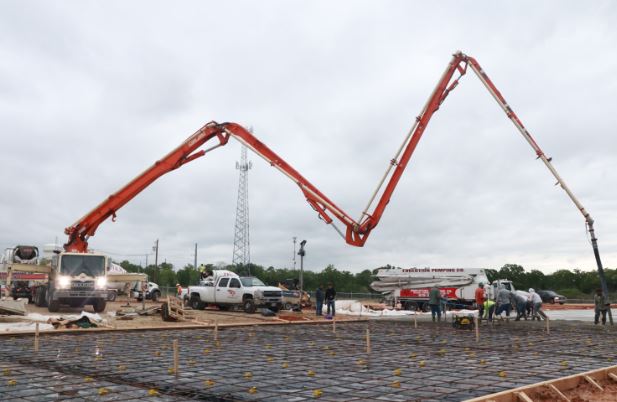
The simplest way to place concrete is straight from the truck, but many sites are not so easy to reach. A line pump uses hoses that can run long distances and through narrow spaces, and the site has to be able to support the weight of the equipment.
What Happens on Site When a Pump Is Used
A pump needs more than a place to park. The pump is primed with a slurry that coats the inside of the lines so the concrete can flow, and overhead power lines are one of the most serious hazards on any pumping site. The rate of placement sets the pace for everyone else on site, and each step is easier when it has been rehearsed in advance.
Staying Safe Around Fresh Concrete and Moving Machinery
Wet concrete, moving trucks, and heavy equipment share a small space. Long hours in summer heat raise the risk of heat illness, so water, rest, and shade matter, and a spotter guides trucks in tight spaces.
Prepping the Base So the Slab Does Not Move
The soil beneath a pour is part of the structure. In clay country, soil movement is the main reason slabs crack and shift, so proper site drainage and steady moisture around a foundation are part of the plan. The steel has to sit at the right height in the slab to do its job, and a final check of dimensions and elevations is made before the first load goes in.
Planning a Pour Around the Forecast
Heat shortens the working time of every batch, so timing the work around the temperature is part of summer concrete work. Sunshades, fog misting, and quick curing protect the surface, and curing compound or wet coverings help the surface harden evenly. Sudden storms are another risk across the state, and watching the forecast closely before and during the pour is part of the job.
Surface Finishes From Broom to Polish
Finishers work against the clock to give the surface its final shape. A broom finish gives traction on driveways and walkways, while a smooth trowel finish suits interior floors, and the surface is a record of how well the timing went. Control joints cut into the surface create planned weak lines so cracks form there, and hairline cracks are common and usually harmless.
Concrete Around the Home
You will find concrete all around a home. Sidewalks and patios need proper slope so water drains away from the house, and the details differ from job to job. Fences, trees, and utility lines can all affect how concrete gets to the forms, and a site visit usually settles the question of access.
Concrete for Buildings, Plants, and Utility Projects
On commercial and industrial sites, pours involve more volume, more people, and more rules. A drilled shaft is a deep column of concrete poured into a bored hole to carry heavy loads, and inspectors may be on site for key stages of the work. If deliveries are late, a cold joint can form where the new concrete meets the old, and planning ahead is what makes a large pour run smoothly.
What Is Different About Public Projects
Streets, highways, and bridges are built to standards that come from the public owner, and the mix, the placement, and the curing are all documented. Weather windows and curing times can limit when work can be done, and good documentation is part of the product.
From the Plant to the Site: How Concrete Gets There
The supply chain starts with the plant and ends with the placement, and each truck carries a limited amount, so large pours need several loads. A small allowance for uneven ground and spillage is common practice, and a steady rhythm of deliveries is the goal.
When a job needs equipment brought in by itself, the details change. Operator experience, delivery to the site, and setup time are part of the picture, and equipment that does not fit the site causes delays that no one wants.
Trucks, pumps, and equipment take over streets and driveways for a few hours. Planning where trucks will wait so they do not block driveways or traffic, and it takes only a few minutes of planning.
The Last Steps: Cleanup, Protection, and Inspection
After finishing, the site still needs attention. Washout water is alkaline and has to be contained, not sent into storm drains or onto neighboring ground, and the new concrete needs to be protected from traffic and weather while it cures. Test results from samples taken during the pour are kept as a record, and a bit of care in the first weeks sets up the life of the surface.
A First Conversation Before the Forms Go Up
If Concrete Pouring in Brazos Valley Texas is on your list, Evolution Concrete BCS can start with a conversation about the site, the access, and the size of the pour. Make contact to begin, and the next step will follow from there.