
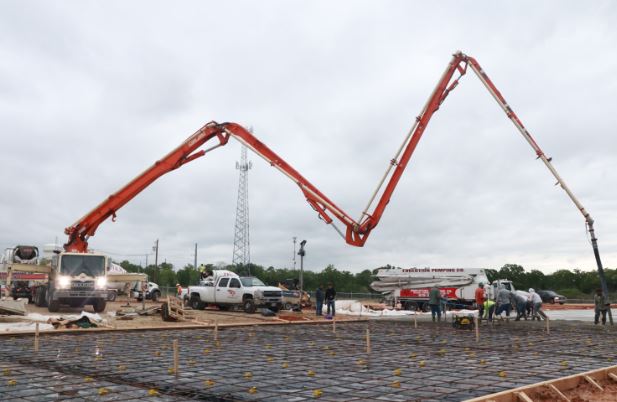
Lining up Concrete Pumping in Services?
Evolution Concrete BCS treats concrete as a job with a deadline built in once the material starts moving across Services job sites.
Reach out to start with the size, the shape, and the access.
Once the Truck Arrives, the Timer Is Running
Anyone weighing Concrete Pumping in Services see the surface that will be walked or driven on, while the moments that matter most are the ones during the pour. From the time it is batched, concrete has a limited working life, and a good plan makes sure no one is waiting for forms, steel, or access when the truck backs in.
On Concrete Pumping, Evolution Concrete BCS begins with access, volume, and the schedule of deliveries with the rest of the plan falling into place around them.
What Is in the Truck Decides What Comes Out of It
The basic ingredients are simple, and the proportions are not. Ordering the right mix for the application is the first technical decision of the job, and the supplier needs to know what the concrete will be used for. Slump is the measure of how stiff or fluid the mix is, and extra water makes the pour easier but leaves a weaker, more cracked slab.
Admixtures and fibers give the mix extra abilities. Each additive has a purpose, and the supplier can explain which ones suit the job, and an experienced supplier and contractor will choose them together.
Getting Concrete From the Truck to Where It Goes
Some jobs are easy to reach and need nothing more than a chute and a wheelbarrow, and that is where pumping comes in. The choice between the two depends on distance, height, volume, and the room available for equipment, and the pump needs a level place to set up and outriggers that can bear the weight.
Boom Reach, Line Length, and Preparation for Pumping
The pump looks simple from the street, but the setup takes planning. The pump is primed with a slurry that coats the inside of the lines so the concrete can flow, and the area around the equipment should be kept clear of anyone not working on the pour. With a pump, the preparation has to be finished before concrete flows, and the plan should say who does what at each stage.
Safety on a Pour: Wet Concrete, Heavy Equipment, and Long Days
A busy pour is one of the more hazardous parts of a construction schedule. Trench edges, open forms, and uneven ground add the chance of falls, and people on site are told where to stand and where not to.
Subgrade, Forms, and Steel: The Work Nobody Photographs
Good subgrade preparation is the least visible and most important part of a pour. In clay country, soil movement is the main reason slabs crack and shift, so the design of the slab is shaped by what is under it. Reinforcing steel is placed inside the forms before the pour and must be held in position, and a vapor barrier under a slab slows moisture from rising through it.
Planning a Pour Around the Forecast
In summer, concrete stiffens quickly in the drum and in the forms, so placement is planned to beat the heat. Shade, wind screens, and dampened subgrade help control surface drying, and curing compound or wet coverings help the surface harden evenly. Rain on an unfinished slab can pit and weaken the surface, and rescheduling a pour for a better day is a normal and sensible decision.
Why Concrete Cracks and What Control Joints Do
Once the concrete is placed, finishing begins right away. Each finish has its own timing, and it has to be done at just the right moment, and waiting too long or starting too soon spoils the finish. Control joints cut into the surface create planned weak lines so cracks form there, and a few fine cracks do not mean something went wrong.
Everyday Residential Pours and What Each Needs
Few materials are used in so many places around a property. A driveway needs thickness and reinforcement for vehicle loads, and each one has its own details for forms, steel, drainage, and finishing. Pumping is often the answer when a truck cannot get close, and a site visit usually settles the question of access.
Commercial and Industrial Concrete: Larger Pours, Tighter Schedules
Concrete on a business or industrial site is usually part of a larger construction schedule. Pipeline, tower, and utility work involve placing concrete in specialized forms and sometimes in difficult locations, and inspectors may be on site for key stages of the work. Coordinating with the plant on timing is as important as the work on site, and it is better to prepare for delays than to be surprised by them.
Concrete for Roads and Bridges Follows Agency Rules
When the owner is a city, a state, or a federal agency, the specifications are detailed and strict, and the mix, the placement, and the curing are all documented. Weather windows and curing times can limit when work can be done, and experience with public specifications makes a difference.
Understanding Ready-Mix Supply and Delivery
Ready-mix concrete is made at a batch plant and delivered in rotating-drum trucks, and each load has a time limit before it must be placed. Calculating the amount of concrete needed takes careful measurement of the forms, and a steady rhythm of deliveries is the goal.
Some projects use equipment that is rented rather than delivered with the concrete. Who operates it, how much it can carry, what size of site it can reach, and how it is cleaned afterward, and the right match between equipment and site keeps the pour moving.
Neighbors and nearby properties are part of any concrete job. Keeping the street clear and the washout away from storm drains, is a courtesy that prevents many complaints.
The Last Steps: Cleanup, Protection, and Inspection
The last steps of a concrete job are quiet but important. Truck chutes, pumps, and tools have to be washed out in a designated area, and the surface is kept moist or covered as needed. The local building office may need to approve foundations and structural slabs before further work proceeds, and concrete that is properly placed and cured will last for decades.
A First Conversation Before the Forms Go Up
With Concrete Pumping planned for a site in Services, Evolution Concrete BCS can start with a conversation about the site, the access, and the size of the pour. Make contact to begin, and bring along any drawings or measurements you have.